Laser powder bed fusion
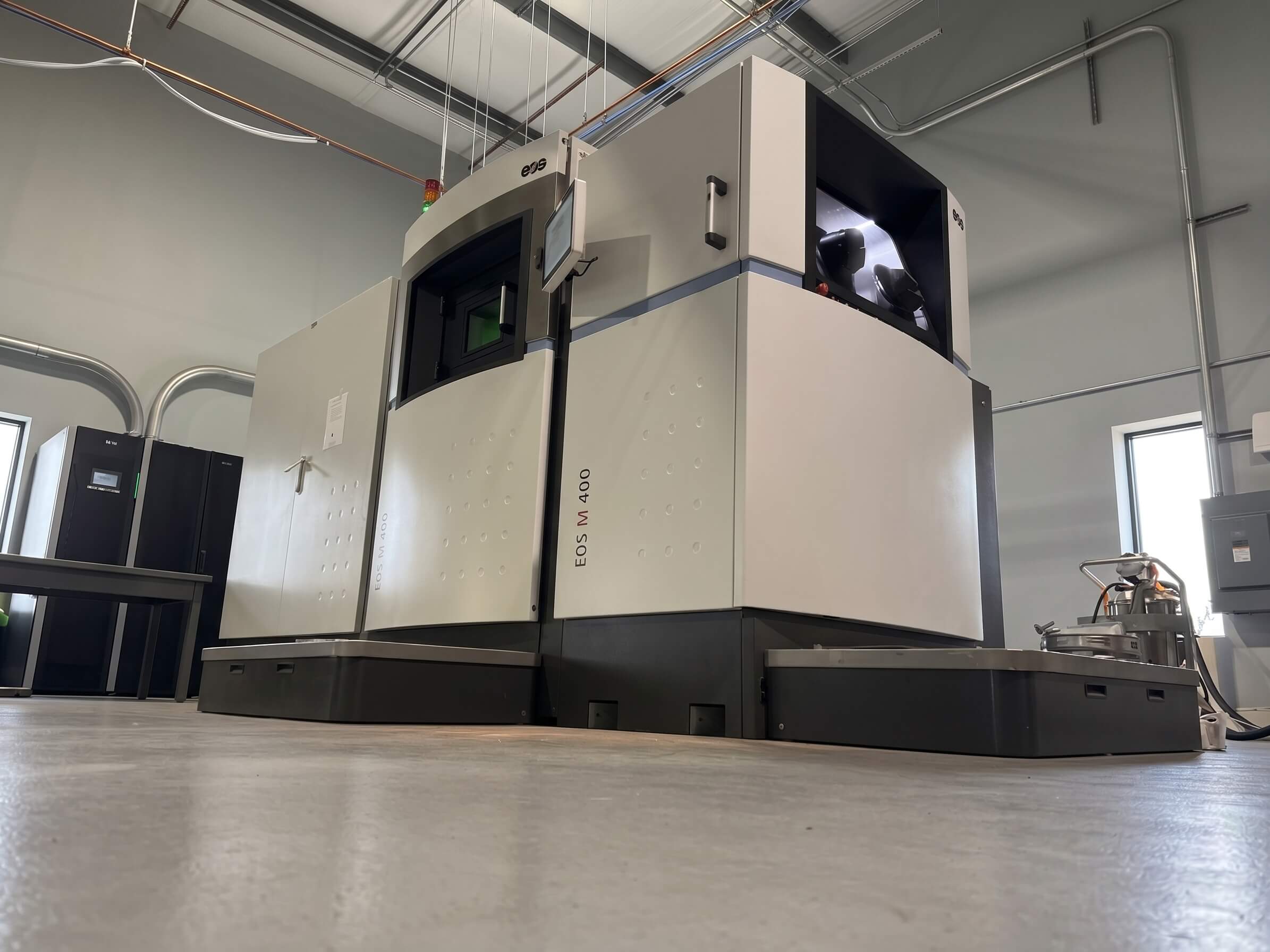
Full melt metal printing on an EOS M400, the largest commercial additive platform running in Alabama. Fine features and internal passages that no cutter can reach.
How the process worksLaser powder bed fusion
Full melt metal printing in Inconel 718 and GRCop-42, from first prototype through pilot production.
 Ignition test
Five things happen between your model and a part you can bolt down.
Full melt metal printing on an EOS M400, the largest commercial additive platform running in Alabama. Fine features and internal passages that no cutter can reach.
How the process worksPart consolidation, conformal channels, lattice and thin wall work. We review geometry before a single layer is fused.
Inconel 718 for strength that holds at temperature. GRCop-42 for pulling heat out of combustion hardware.
Stress relief, support removal and surface finishing, coordinated through finishing partners we already work with.
Models during development, then repeatable low volume runs for aerospace, defense, medical and automotive programs.
We run the materials our customers actually fly, and we know how each one behaves in the build.
IN718
A nickel superalloy that keeps its strength and creep resistance where aluminium and steel give up. The default for turbine, manifold and structural hardware that runs hot.
Inconel 718 3D printingGRCop-42
A copper chromium niobium alloy developed by NASA. It moves heat like copper while holding strength past 700 °C, which is why it lines regeneratively cooled combustion chambers.
GRCop-42 3D printingSelected work
Printed on the build plate
As built surface detail
Housings and manifolds
Internal passages, sectioned
Five moves. You hear from an engineer at every one of them, not a portal.
Send a model and a material. You get pricing and an honest read on whether the geometry will build. What drives the price.
We flag overhangs, trapped powder and thin walls that will not survive, then propose the fix.
Fused layer by layer on the M400, monitored through the run.
Stress relief, support removal and surface work to your callout.
Dimensional checks and build documentation travel with the parts.
About AME
Additive Manufacturing & Engineering was incorporated in 2018 in Huntsville, Alabama, a few miles from Marshall Space Flight Center. We are a HUBZone and Small Disadvantaged Business certified supplier, and the team behind the machines has 35 combined years in additive.
Customers come to us for intricate metal parts, prototypes and models that conventional manufacturing cannot produce, and for pilot series work in medical, automotive and aerospace.
More about AME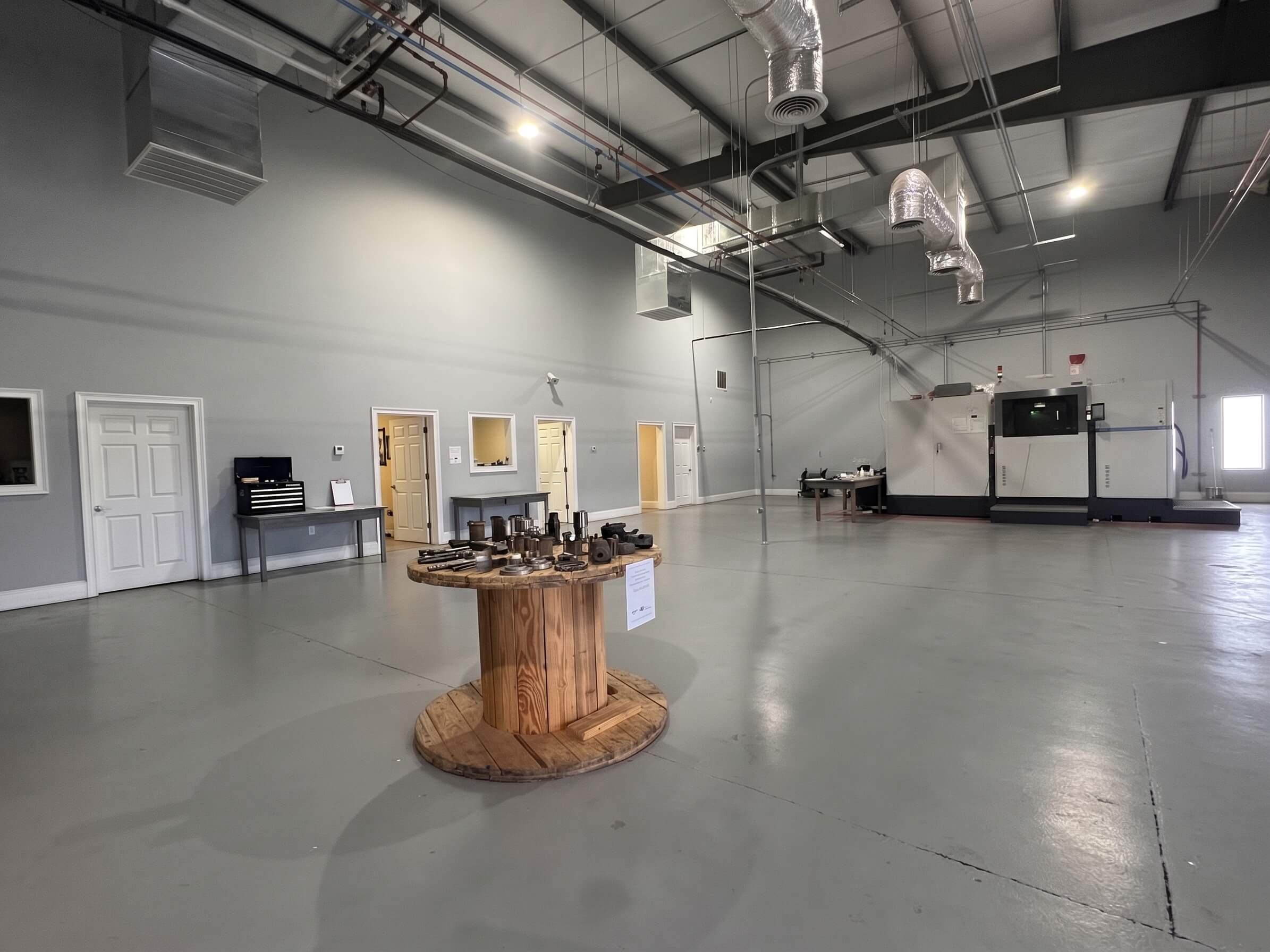
What the service includes, how the process works, what the alloys do, and what a part costs.
What the job includes, the specifications, and how to choose a shop.
ProcessHow the machine works, the design rules, and LPBF next to powder metallurgy.
PricingSix cost drivers, typical ranges, and how to bring the number down.
PrimerThe process families, the standards, and where LPBF fits.
GuideWhen plastic is enough, and when the part has to be metal.
LocationNext to Redstone Arsenal and Marshall. Visit the shop.
Request a quote
Pricing and an honest read on the geometry, from an engineer. Call the shop or send the request and we will pick it up from there.